

Description
Mayfly Nymphs – Life Below the Surface
Mayfly nymphs are the engine of the river and lake ecosystem. They are active year-round and represent a constant, reliable food source for trout and grayling from early spring to late autumn. To fish a mayfly nymph successfully, you must understand their behavior. They are categorized into three main types: Digging, Swimming, and Clinging nymphs, each adapted to specific environments.
-
Digging Nymphs: Found in lakes and slow-moving river sections with soft or sandy bottoms. These include some of the giants, like the Green Drake (Ephemera danica).
-
Swimming Nymphs: Agile and active, these are found in both still and moving water. They are often drift-feeders, like the Claret Dun (Leptophlebia).
-
Clinging Nymphs: The "bodybuilders" of the mayfly world. Short, compact, and powerful, they live on rocks in the roughest currents, like the Yellow May Dun (Heptagenia).
Our Commitment: Anatomical Accuracy & Performance Since mayfly nymphs spend most of their lives tucked away near the bottom, they only become truly vulnerable when they lose their grip, drift to find food, or begin their journey to the surface to hatch. This is when the fish strike.
Our commitment is to provide imitations that match the specific silhouette and behavior of these three categories. By using J:son’s unique materials, we create nymphs with the correct proportions, lifelike legs, and balanced weight.
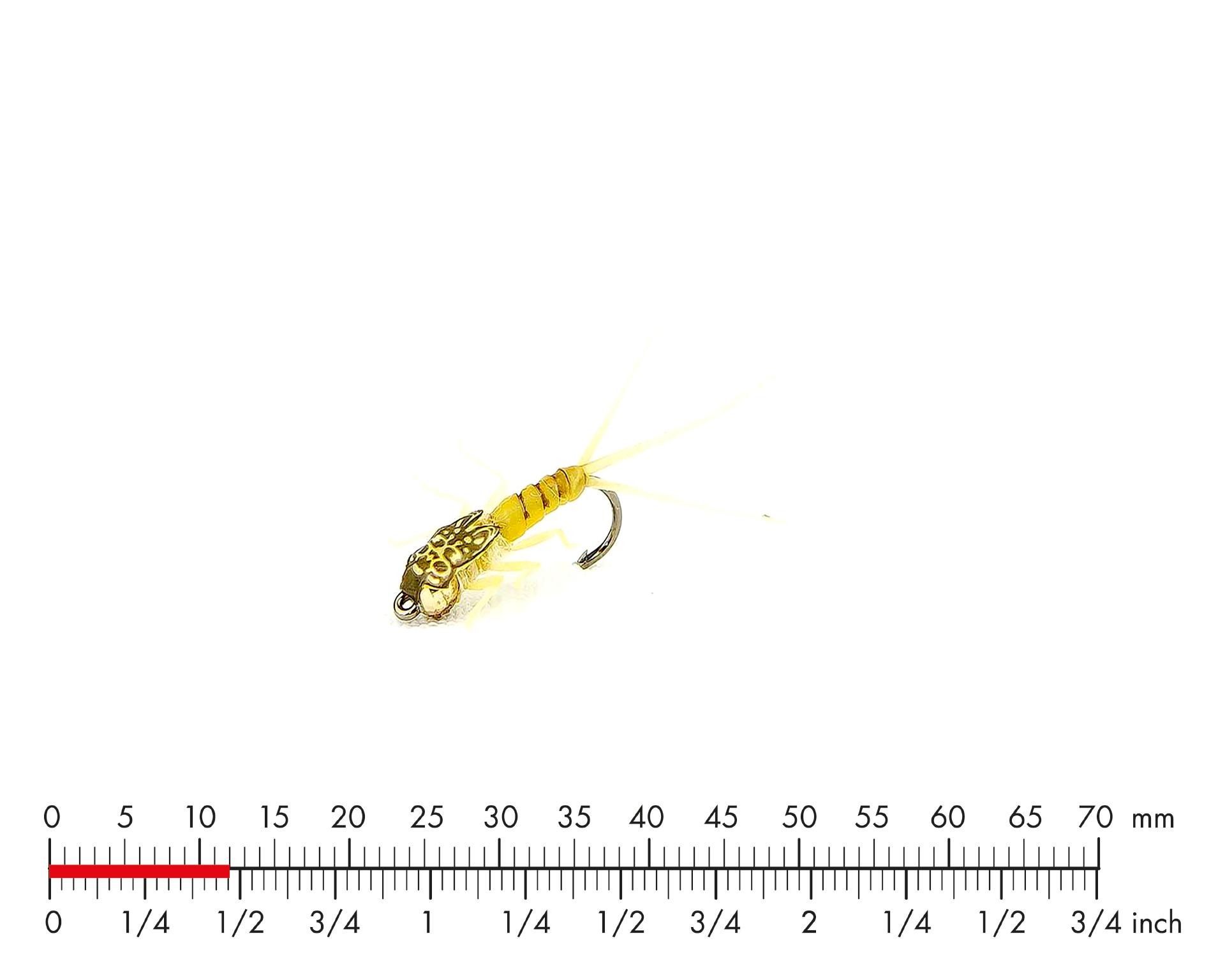
The Micro Sulphur Sinker – J:son Tungsten Mayfly Nymph 5 Sulphur (Hook #18) The Tungsten Sulphur Nymph 5 in size #18 is a specialized technical fly designed to mimic the smallest nymphs of the Ephemerellidae family. At this miniature scale, the pale yellow-olive and amber tones of the Sulphur series provide a realistic, translucent appearance that is highly effective in clear water and under bright skies.
Tied on a precision size #18 hook, this micro-nymph is equipped with integrated tungsten weighting. This allows the fly to break the surface tension and reach the feeding zone near the bottom instantly—an essential feature for such a small profile that would otherwise drift too high in the water column. Despite its tiny size, J:son’s hallmark anatomical realism is preserved, featuring a segmented body and lifelike legs. This is the perfect choice for technical "match-the-hatch" scenarios where trout and grayling are keyed in on small, active sulphur nymphs deep in the water before the hatch begins.