

Description
The first stage in the life cycle of a caddis fly is the larva. Found in both still and moving waters, these insects are a constant and vital food source for fish. Depending on the species, caddis larvae are either case-builders, net-spinners, or free-living.
Case-building larvae construct protective homes from sand, stones, or plant material. As they grow and move between cases, they become highly vulnerable. Net-building larvae use silk to create food-catching structures, while free-living larvae move openly across the bottom.
Most often, you will find these larvae on the bottom; they only accidentally drift downstream in moving water or when searching for new feeding grounds. Those living in still water move slowly across the lake bed. To be successful, it is necessary to fish your imitations as close to the bottom as possible. Many seasoned anglers consider a realistic caddis larva imitation to be among the best, if not the best, trout flies available.
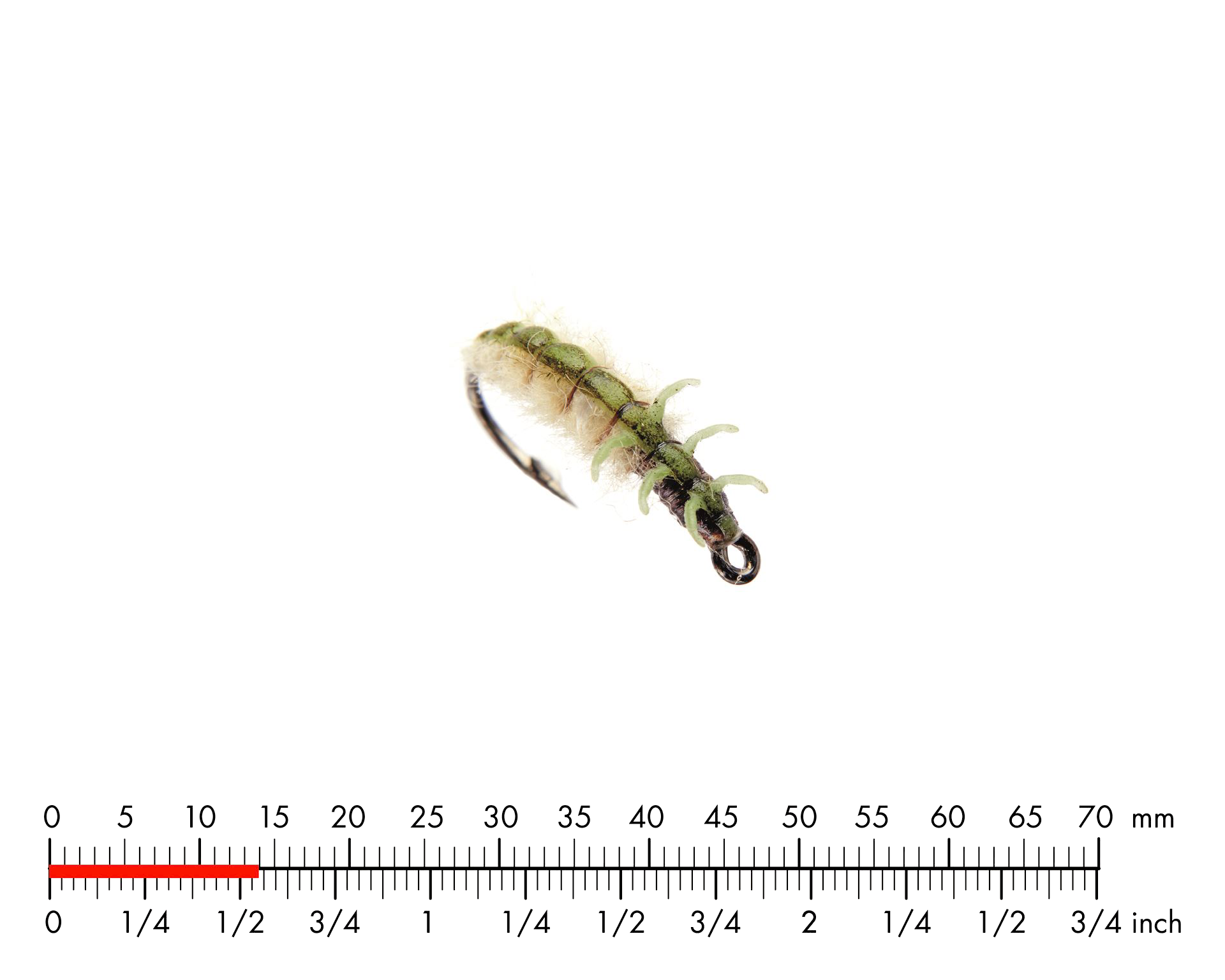
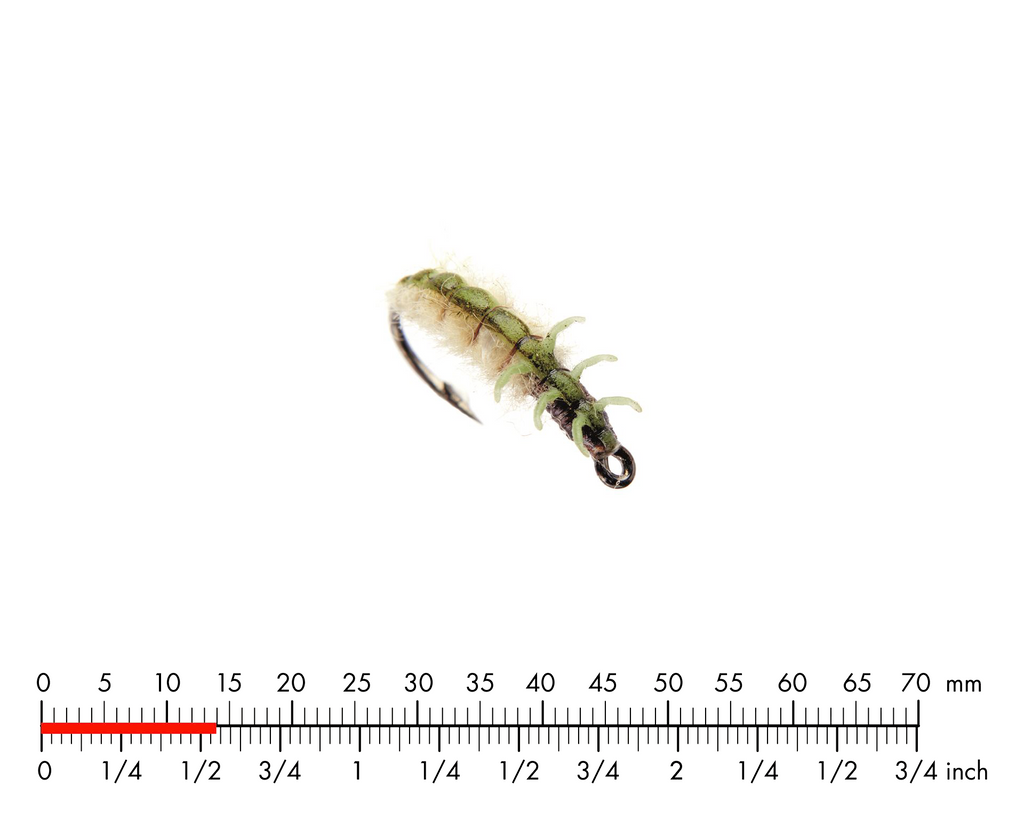
The Stream-Bed Essential – J:son Caddis Larva 4 Green (#12) The J:son Caddis Larva 4 in Green is a high-precision imitation, tied on a size #12 hook to perfectly match smaller species of free-living green caddis larvae. The vibrant green body is a classic trigger for trout and grayling, especially in fast-flowing, well-oxygenated streams where these larvae are a primary food source. Its smaller profile makes it an excellent choice for technical water where fish may be spooked by larger, bulkier patterns.
Using J:son’s advanced anatomical design, this fly features a segmented body with a lifelike translucency that mimics the soft, organic look of a real larva. When fished deep and allowed to drift naturally along the bottom, the #12 Green Larva provides a convincing silhouette that stands out just enough to get noticed without looking out of place. It is a must-have pattern for the technical nymph fisherman, offering incredible realism in a compact and effective size.