
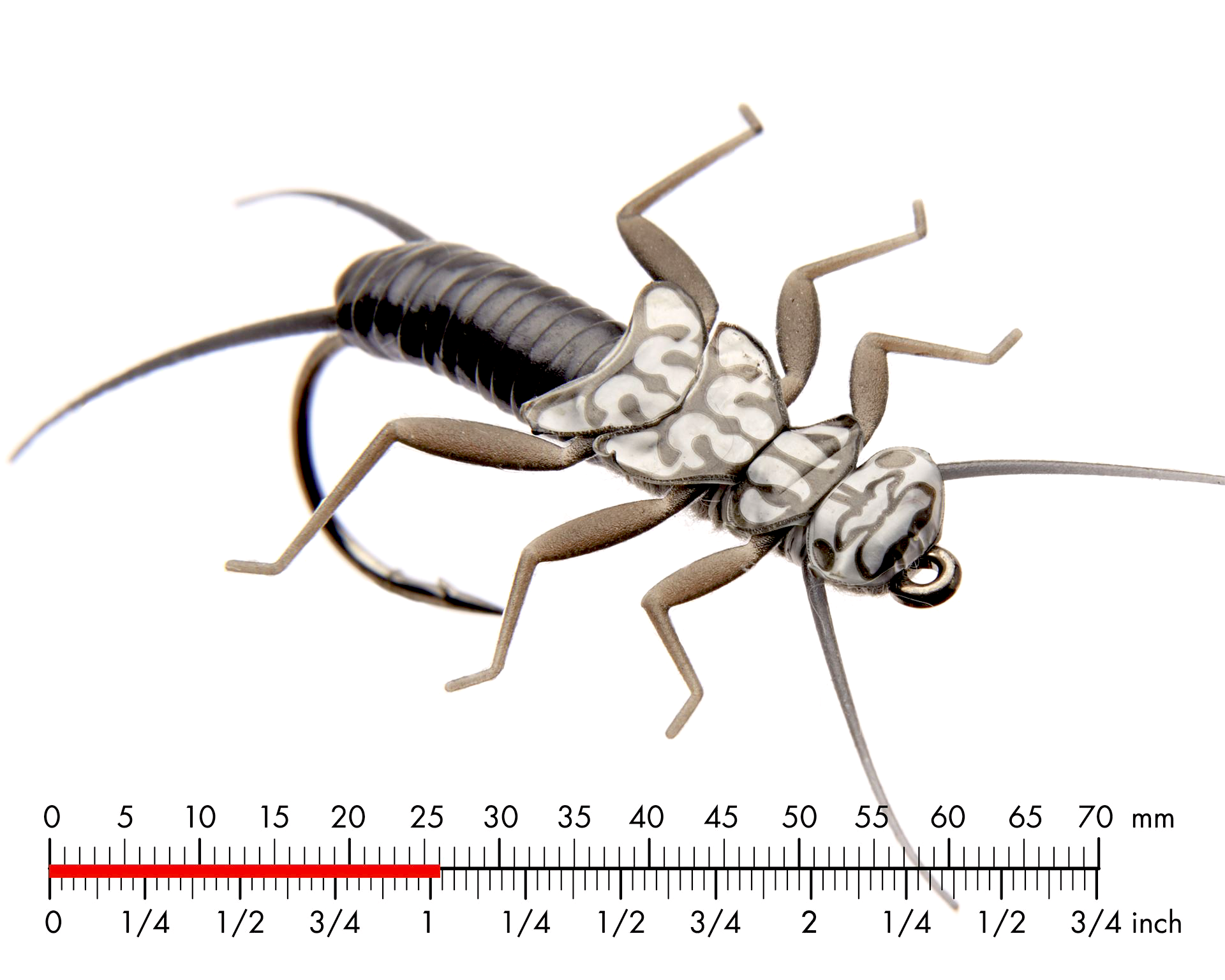
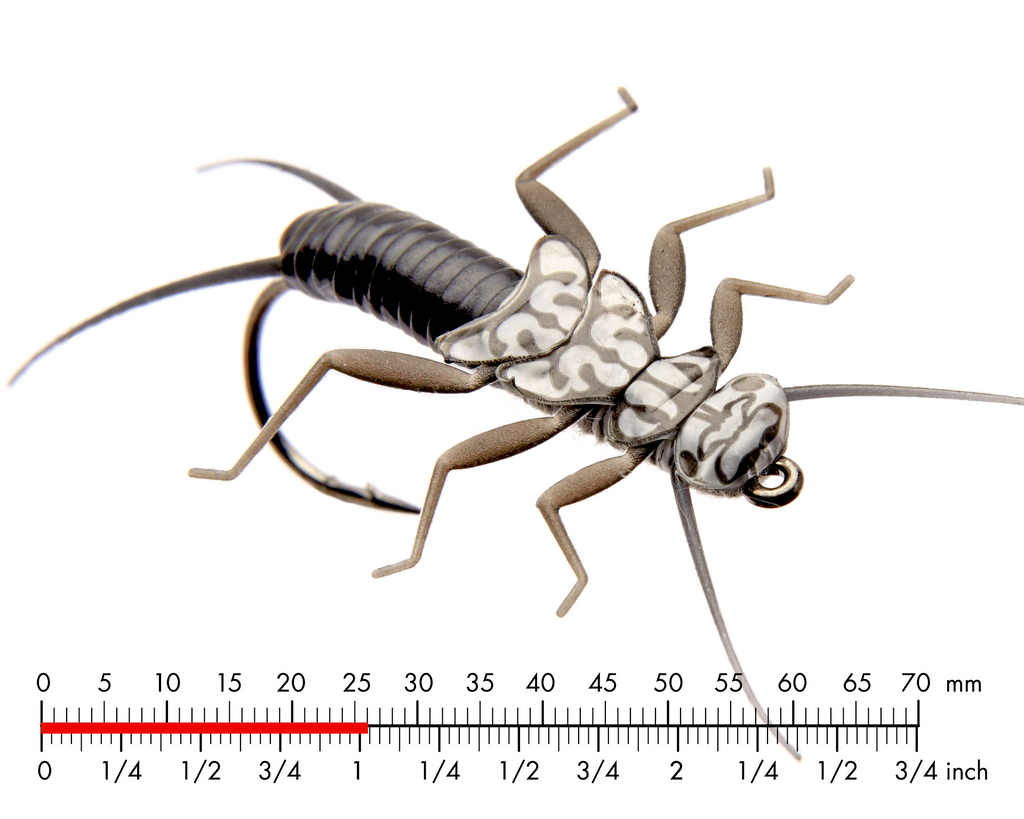
Description
Stonefly Nymphs – The Year-Round Secret
Why Stonefly Nymphs are a must-have:
-
Protein Power: These nutrient-rich nymphs are a primary food source for trout and grayling all year long.
-
Easy Targets: As poor swimmers, they often lose their grip and drift downstream, becoming an effortless "snack" for waiting fish.
-
Bottom Dwellers: Unlike many insects, they don't swim to the surface to hatch; they crawl to the shore. This keeps them in the "strike zone" near the riverbed for their entire life cycle.
J:son Stonefly Nymph 2 Black – Barbless (#4)
The High-Contrast All-Rounder – Dinocras and Perla Specialist The J:son Stonefly Nymph 2 Black Barbless in size #4 is a 26 mm imitation. This is the standard (unweighted) version of the mid-to-large black stonefly, designed with a premium barbless hook. It is a "must-have" for technical rivers where fish are wary and catch-and-release regulations are in place.
Why this fly works:
-
Unweighted for Subtle Presentation: Without a tungsten core, this 26 mm nymph has a more natural, lifelike buoyancy. It tumbles and drifts with the current rather than dragging along the bottom, which is often the difference-maker in clear water or slower runs.
-
Superior Contrast: The jet-black color creates a bold, sharp silhouette. This is particularly effective in high-flow conditions, "white water" riffles, or deep shaded pools where fish need a clear target to lock onto.
-
Barbless for Healthy Fisheries: The high-quality barbless hook ensures quick penetration and a secure hold, but allows for a fast, stress-free release. This makes it the ethical choice for anglers targeting large wild trout.
-
Anatomical Mastery: Even without weight, the fly maintains its perfect anatomical profile. J:son’s signature flexible legs and segmented body create organic micro-vibrations in the water, signaling to the fish that this is a living, vulnerable meal.
Pro Tip: This is a fantastic fly for "searching" through pocket water. Because it isn't heavy, you can drift it into shallower areas or tight against the banks where stoneflies crawl to hatch without constantly snagging. In deeper water, try fishing it on a long leader with a small split shot or as a "dropper" behind a heavier nymph to give it a more varied, natural movement.