
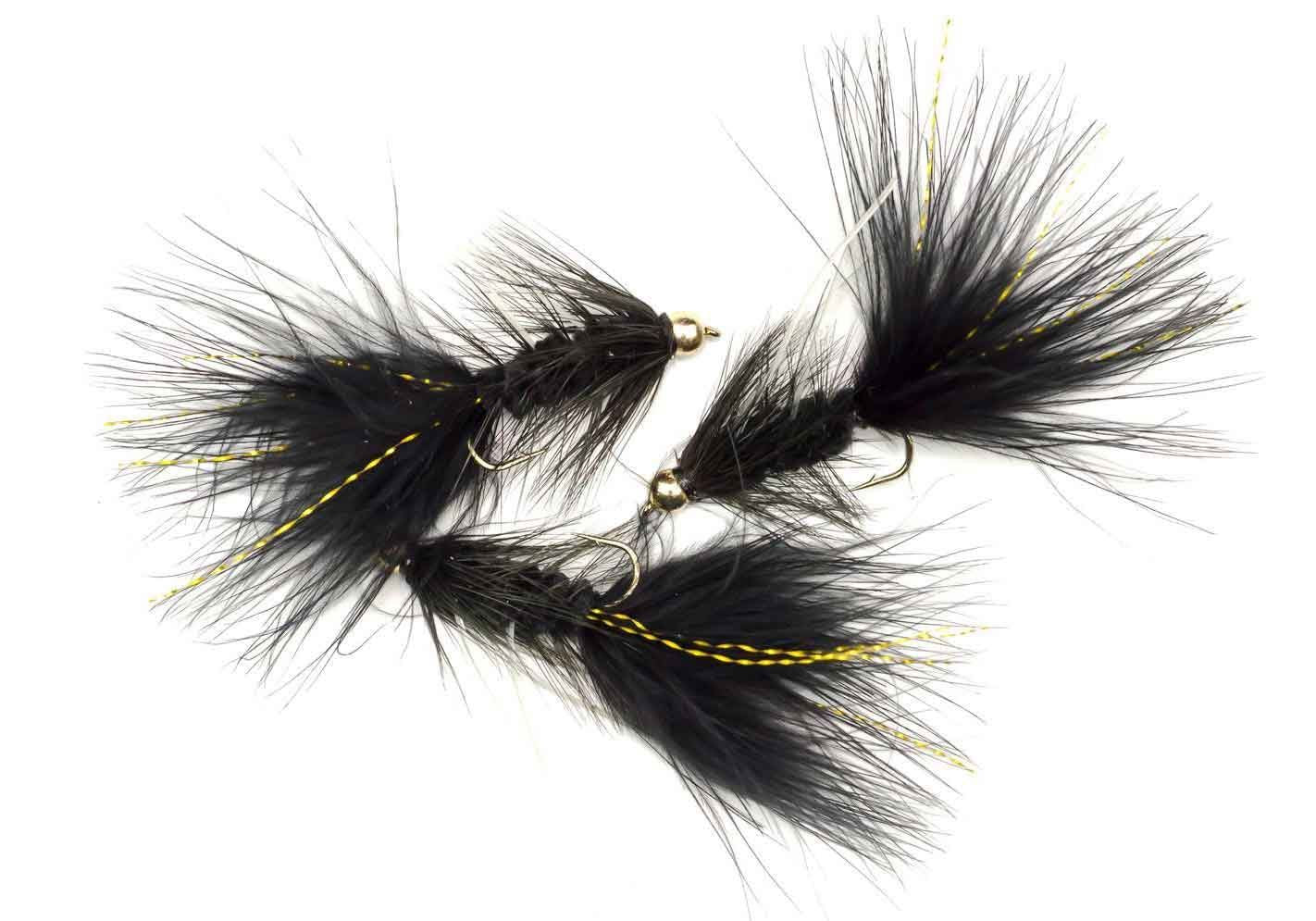

Description
The Woolly Bugger is one of the most famous and effective streamer patterns in fly fishing. The addition of rubber legs adds extra lifelike movement. It's designed to imitate a wide variety of prey, including leeches, minnows, crayfish, stonefly nymphs, and even other aquatic insects. This black variation, especially with a bead head, is an essential part of any fly box.
Best Suited For:
This is an extremely versatile fly that will catch almost any species of fish. It's particularly effective for trout (rainbow, brown, and cutthroat), bass (largemouth and smallmouth), pike, panfish like perch and sunfish, and even steelhead and salmon. Its large profile and active movement are irresistible to predatory fish.
Best Time to Fish:
The black Woolly Bugger is a year-round fly, but it shines in the spring and fall when fish are actively feeding. It's also a go-to fly in low light conditions (like dawn, dusk, or on cloudy days) and in murky or stained water, where its dark profile and movement stand out.
Water Type:
This fly is primarily a freshwater pattern. It's a staple in rivers, streams, lakes, and ponds. However, variations of the Woolly Bugger are used in saltwater for species that feed on small baitfish and crustaceans, such as sea trout and striped bass.
Where to Fish:
This fly is highly effective in almost any freshwater environment. Fish it in rivers and streams by letting it swing in the current or retrieving it with short strips. In lakes and ponds, it's excellent for fishing around weed beds, submerged logs, and along drop-offs where fish lie in wait for prey.
Other Value:
Bead Head: Many Woolly Buggers, like the one shown, have a bead head to help them sink faster and to add an extra "jigging" action in the water.
Retrieval: The Woolly Bugger's marabou tail and rubber legs create a pulsating, lifelike motion with even the slightest movement. You can fish it with a variety of retrieves, from a slow, steady pull to fast, aggressive strips.
Size: This fly comes in a huge range of sizes. Smaller sizes (size 10-14) are great for imitating nymphs, while larger ones (size 4-8) are perfect for imitating leeches or baitfish.
Black & Grey Woolly Worm
The Woolly Worm is a classic and versatile fly pattern, often categorized as a wet fly or nymph. It's designed to be fished subsurface. While its name suggests a caterpillar, it's most often used to imitate larger aquatic insects like stonefly nymphs and hellgrammites, as well as leeches. The black and grey colors provide a realistic imitation of many of these food sources.
Best Suited For:
This is an excellent multi-species fly, and the black and grey color is especially effective for trout (including rainbow, brown, and brook trout), bass (largemouth and smallmouth), and panfish like perch. It's a go-to for targeting fish that feed heavily on stoneflies and other dark-colored insects.
Best Time to Fish:
The Woolly Worm can be fished successfully all year round, but it's particularly effective during the spring, summer, and fall. The natural colors of the brown and black pattern are great to use in clear water and on sunny days, as they provide a realistic imitation. It’s also a good choice on cloudy days or in slightly stained water.
Water Type:
The Woolly Worm is primarily a freshwater fly. It's a go-to pattern for rivers, streams, lakes, and ponds. While it's not a typical saltwater fly, some anglers have reported success with it for certain coastal species.
Where to Fish:
The Woolly Worm can be fished in almost any freshwater environment. It's highly effective in rivers and streams when fished to imitate a nymph or a leech drifting in the current. In lakes and ponds, it's excellent for fishing around weed beds, submerged structures, or drop-offs.
Other Value:
Retrieval: The beauty of this fly is its versatility. You can use different retrieves to mimic different prey. A slow, steady retrieve can imitate a swimming leech, while short, erratic strips can make it look like a fleeing minnow or a swimming nymph. You can also let it drift naturally in the current like a dead insect.
Woolly Worm vs. Woolly Bugger: The Woolly Worm is the predecessor to the more well-known Woolly Bugger. The main difference is that the Woolly Bugger has a marabou tail, which gives it more lifelike movement in the water.