
Description
Some of the smallest insects are often the most interesting to both fish and fisherman. Midges (Chironomidae) typically appear in massive quantities when they hatch. Found in still waters like lakes and slow-moving sections of rivers, they are a vital food source for many species, including trophy brown trout.
When midges hatch, the pupae hang vertically in the surface film with their heads up. In this stage, they are an easy, stationary target, often triggering even the largest fish to start feeding on the surface with classic "head-and-tail" rises.
Success requires patience. Instead of constantly casting to new spots, let your imitation sit still; fish will find it as long as your leader doesn't spook them and your fly has the right proportions. Whether they are greenish, brownish, red, or black, midges are among the first and last insects to hatch each season. Success requires long leaders, fine tippets, and the confidence that small flies truly do catch big fish.
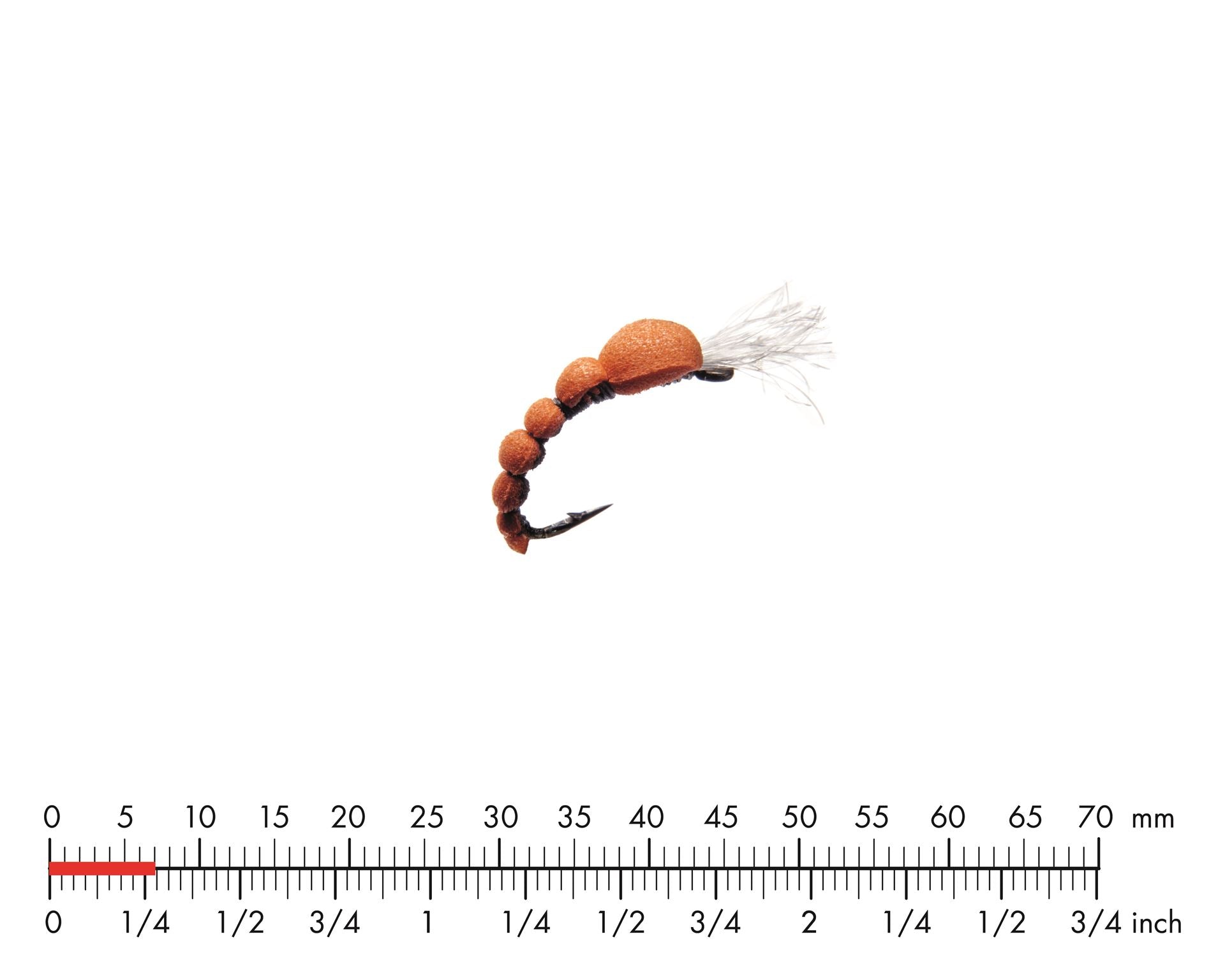
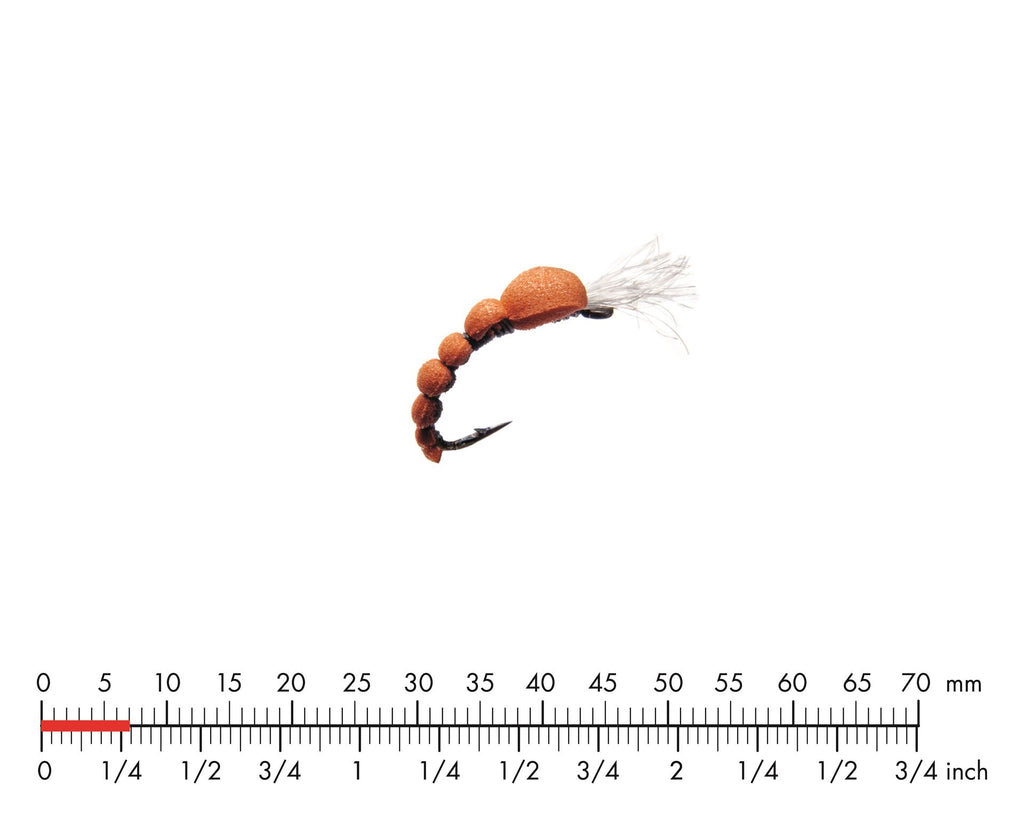
The High-Vis Emerger – J:son Midge Pupa 5 Red (#18) The J:son Midge Pupa 5 in Red is a specialized imitation of the chironomid pupa in its most vulnerable state. While many midges are dark, the red pupa (often emerging from the "bloodworm" larval stage) is a high-protein target that fish find impossible to resist. This fly is designed to hang vertically in the surface film, perfectly mimicking the natural insect as it prepares for its final transformation.
Tied on a size #18 hook, this fly offers extreme anatomical realism, from its segmented body to its delicate thorax. A key feature for the angler is that the hook eye is no smaller than a size #18, ensuring that you can thread your leader quickly and easily, even during a fast-paced hatch. When fishing still waters or slow glides, the Red Midge Pupa acts as a powerful trigger—just let it sit motionless in the surface and wait for the rhythmic rise of a feeding fish.