

Description
Stonefly Nymphs – The Year-Round Secret
Why Stonefly Nymphs are a must-have:
-
Protein Power: These nutrient-rich nymphs are a primary food source for trout and grayling all year long.
-
Easy Targets: Because they are poor swimmers, they often tumble along the bottom or drift downstream when searching for new habitats, making them an easy meal.
-
The Crawlers: Unlike mayflies, stoneflies don't swim to the surface to hatch—they crawl to the shore. This means they spend their entire life cycle close to the riverbed.
J:son Stonefly Nymph 4 Black (#12)
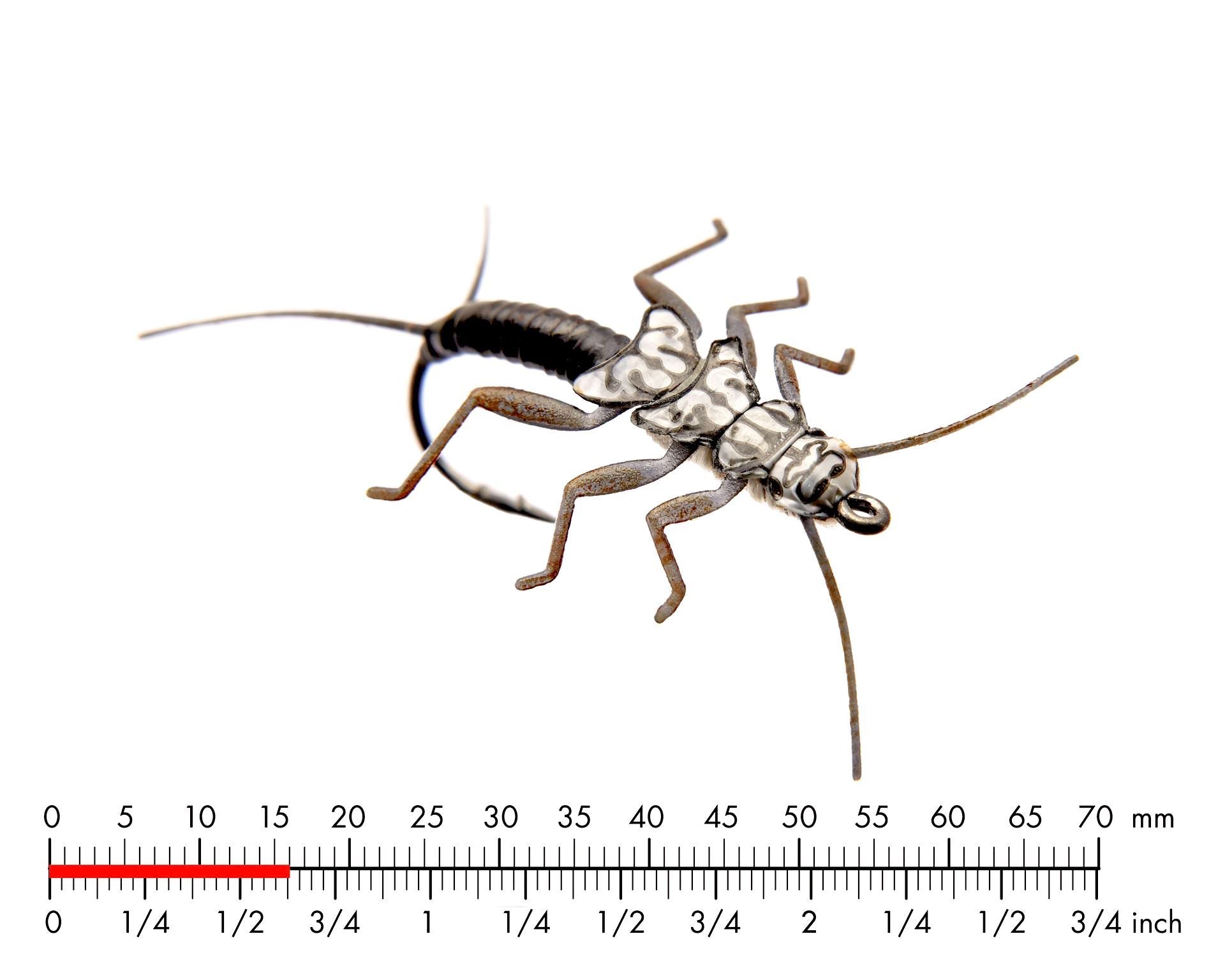
The Small Perla and Nemoura Imitator The J:son Stonefly Nymph 4 Black in size #12 features a compact 16 mm profile. This size and color are specifically designed to mimic the smaller nymphs of the Perlidae family (such as juvenile Perla species) and the common Small Black Stoneflies from the Nemouridae family, such as Nemoura cinerea. These smaller black stoneflies are ubiquitous in almost all clean running waters.
Why this fly works:
-
Biological Accuracy: While many anglers focus on the giants, the smaller black nymphs of the Nemoura genus are present in massive numbers throughout the year. The 16 mm profile and deep black coloration perfectly replicate these common "bread and butter" insects.
-
Anatomical Mastery: Despite its smaller scale, this nymph maintains J:son’s industry-leading realism. It features the characteristic broad thorax and segmented wing pads of the stonefly family, providing a silhouette that fish recognize instantly.
-
Stealthy Presentation: The size #12 hook combined with a 16 mm body offers a non-threatening profile. This makes it an ideal choice for technical fishing in clear water or when trout are selectively feeding on smaller drift organisms.
-
Soft-Body Technology: Constructed from J:son’s signature flexible materials, the fine legs flutter with the slightest water movement. This organic texture ensures that fish hold onto the fly longer, giving you the advantage during the strike.
Pro Tip: This is a "must-have" for early spring and late autumn. During these periods, smaller black stoneflies are often the most active insects in the river. Fish this nymph on a dead-drift through shallow riffles and along the edges of weed beds where Nemoura nymphs typically congregate.