
Description
The first stage in the life cycle of a caddis fly is the larva. Found in both still and moving waters, these insects are a constant and vital food source for fish. Depending on the species, caddis larvae are either case-builders, net-spinners, or free-living.
Case-building larvae construct protective homes from sand, stones, or plant material. As they grow and move between cases, they become highly vulnerable. Net-building larvae use silk to create food-catching structures, while free-living larvae move openly across the bottom.
Most often, you will find these larvae on the bottom; they only accidentally drift downstream in moving water or when searching for new feeding grounds. Those living in still water move slowly across the lake bed. To be successful, it is necessary to fish your imitations as close to the bottom as possible. Many seasoned anglers consider a realistic caddis larva imitation to be among the best, if not the best, trout flies available.
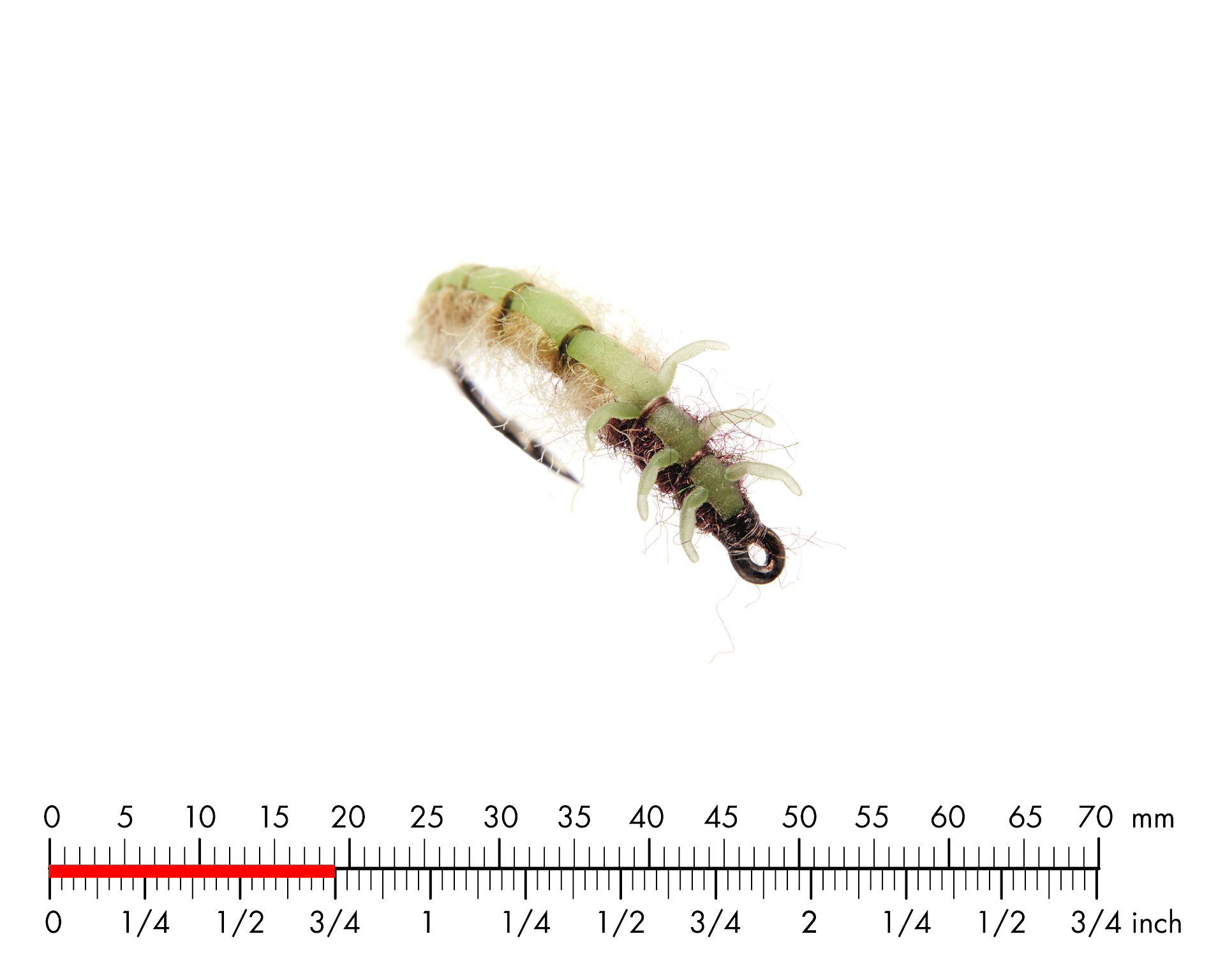
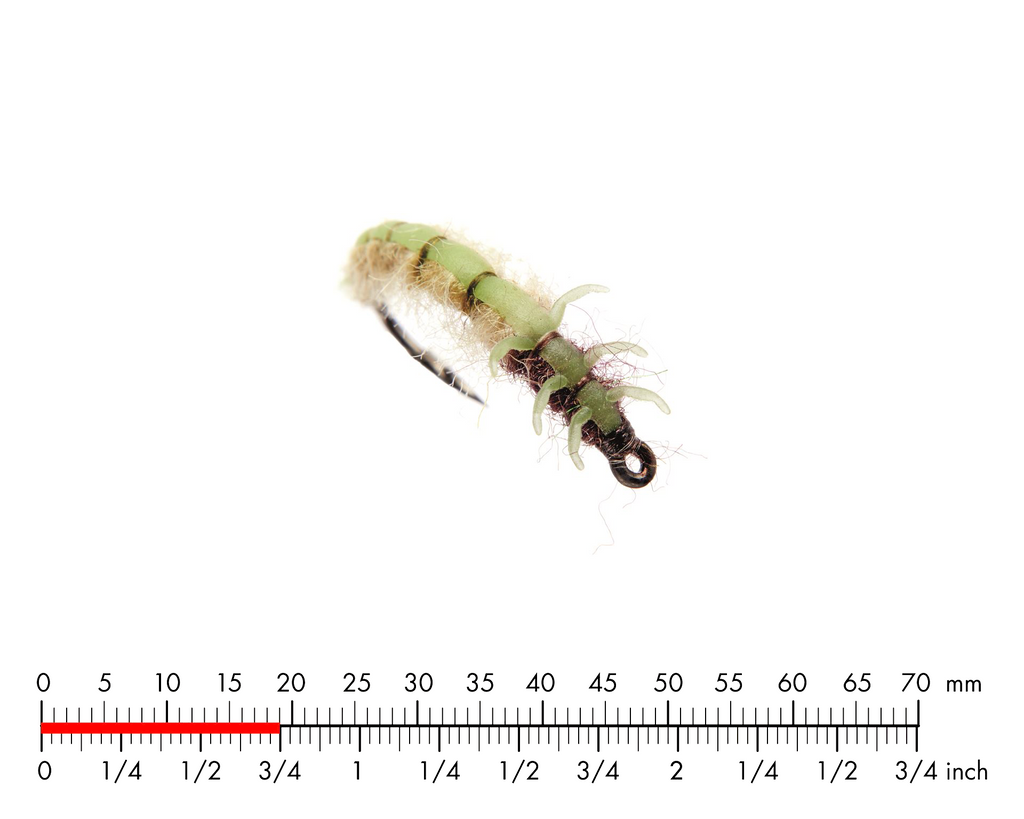
The Precision Nymph – J:son Caddis Larva 3 Green (#10) The J:son Caddis Larva 3 in Green is a precision-engineered imitation designed to match medium-sized green caddis larvae. Tied on a size #10 hook, this pattern strikes the perfect balance between visibility and subtle realism. The vibrant green body is specifically chosen to mimic the many species of free-living larvae that thrive in the oxygenated currents of trout streams worldwide.
Thanks to J:son’s anatomical design, this larva features a beautifully segmented body and a realistic thorax that creates a lifelike silhouette. Its size #10 profile is a staple for fly fishers who need a fly that can be fished effectively in both moderate currents and still waters. When presented deep and allowed to tumble naturally along the bottom, the Green Larva’s translucency and organic shape are often enough to tempt even the most cautious trout and grayling. It is a reliable, high-performance pattern for any "match-the-hatch" scenario.