

Description
The first stage in the life cycle of a caddis fly is the larva. Found in both still and moving waters, these insects are a constant and vital food source for fish. Depending on the species, caddis larvae are either case-builders, net-spinners, or free-living.
Case-building larvae construct protective homes from sand, stones, or plant material. As they grow and move between cases, they become highly vulnerable. Net-building larvae use silk to create food-catching structures, while free-living larvae move openly across the bottom.
Most often, you will find these larvae on the bottom; they only accidentally drift downstream in moving water or when searching for new feeding grounds. Those living in still water move slowly across the lake bed. To be successful, it is necessary to fish your imitations as close to the bottom as possible. Many seasoned anglers consider a realistic caddis larva imitation to be among the best, if not the best, trout flies available.
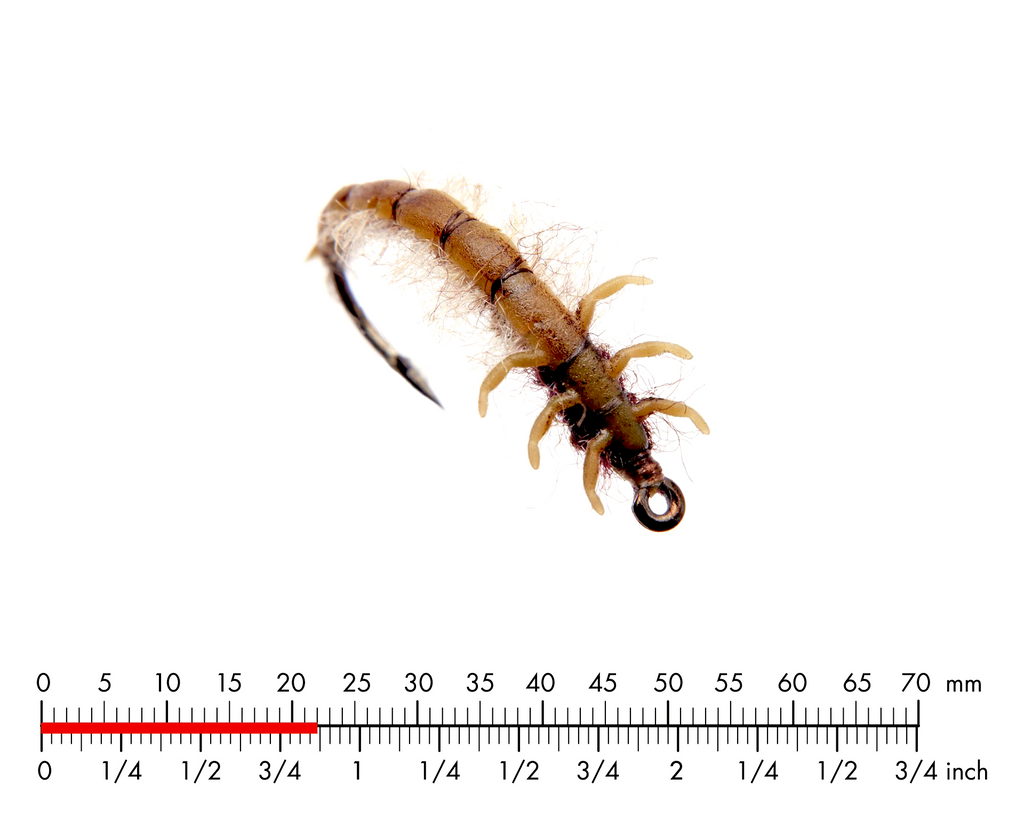
The Universal Bottom-Feeder – J:son Caddis Larva 2 Olive Brown (#8) The J:son Caddis Larva 2 in Olive Brown is a master of camouflage and realism. Tied on a size #8 hook, it is designed to match the medium-to-large larvae that inhabit the rocky and silty substrates of most rivers and lakes. The Olive Brown shade is arguably the most versatile color for larva imitations, as it perfectly mimics the organic, muted tones of countless caddis species in their natural environment.
Built with J:son’s signature anatomical precision, this fly features a segmented body that provides a lifelike translucency and silhouette under water. Its size and weight (when fished with a sinking leader or weighted nymphing setup) allow it to get down into the "feeding zone" where trout and grayling expect to find them. Whether you are fishing during a hatch or on a quiet day when nothing is rising, the #8 Olive Brown Larva is a dependable choice that relies on pure, natural realism to trigger a take.