

Description
Stonefly Nymphs – The Year-Round Secret
Why Stonefly Nymphs are a must-have:
-
Protein Power: These nutrient-rich nymphs are a primary food source for trout and grayling all year long.
-
Easy Targets: Because they are poor swimmers, they often tumble along the bottom or drift downstream when searching for new habitats, making them an easy meal.
-
The Crawlers: Unlike mayflies, stoneflies don't swim to the surface to hatch—they crawl to the shore. This means they spend their entire life cycle close to the riverbed.
J:son Stonefly Nymph 5 Olive Brown (#16)
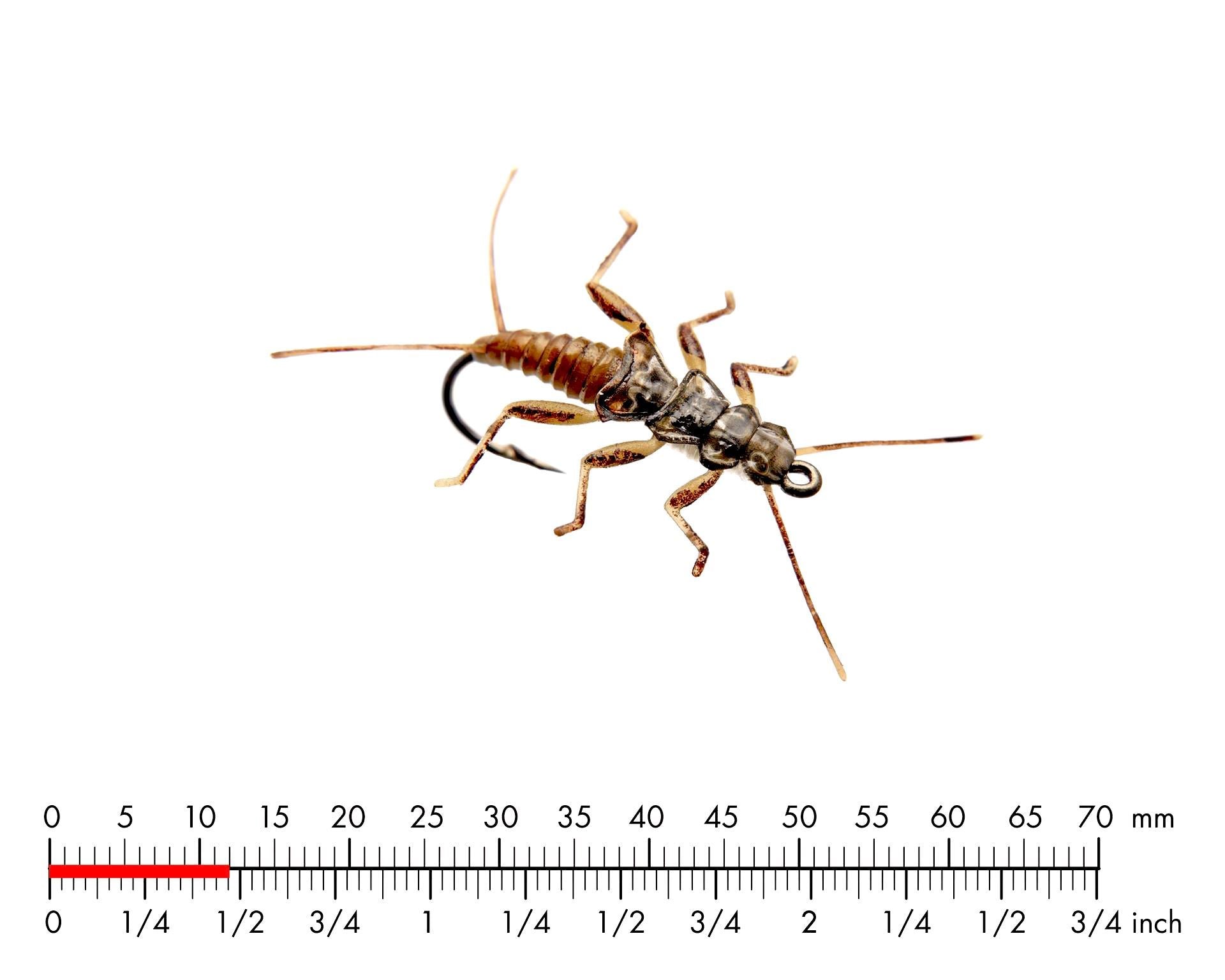
The Micro Specialist – Amphinemura and Nemoura Imitator The J:son Stonefly Nymph 5 Olive Brown in size #16 is a masterfully crafted 12 mm imitation. This "Micro" size is designed to replicate the small, earthy-toned nymphs of the Nemouridae and Leuctridae families. In particular, it is the perfect match for the Early Brown and small Forest Stoneflies (Amphinemura sulcicollis), which are prevalent in cold, clean streams throughout the season.
Why this fly works:
-
Biological Accuracy: Small olive and brown stoneflies are often the most abundant nymphs in a river's substrate. The 12 mm profile and mottled Olive Brown coloration provide a perfect "match-the-hatch" solution for these common, everyday food sources.
-
Anatomical Mastery: Even at this miniature scale, J:son’s S5 design maintains perfect anatomical proportions. The segmented wing pads and ultra-fine, flexible legs create a lifelike silhouette that convinces even the most selective trophy fish.
-
Stealthy Presentation: The #16 hook and slender body are ideal for low-water conditions and crystal-clear mountain streams where a larger fly might spook wary fish.
-
Soft-Body Technology: Utilizing J:son’s signature flexible materials, the nymph has an organic texture. This ensures that when a fish sips in this tiny nymph, it doesn't feel a hard imitation, resulting in longer hold times and better hook sets.
Pro Tip: This is a fantastic "dropper" nymph. In a "Dry-Dropper" rig, its light weight and realistic profile make it a deadly companion to a small caddis or mayfly on the surface. It is especially effective for grayling in the tail-ends of pools and for trout in slow, technical water.