
Description
Mayfly Nymphs – Life Below the Surface
Mayfly nymphs are the engine of the river and lake ecosystem. They are active year-round and represent a constant, reliable food source for trout and grayling from early spring to late autumn. To fish a mayfly nymph successfully, you must understand their behavior. They are categorized into three main types: Digging, Swimming, and Clinging nymphs, each adapted to specific environments.
-
Digging Nymphs: Found in lakes and slow-moving river sections with soft or sandy bottoms. These include some of the giants, like the Green Drake (Ephemera danica).
-
Swimming Nymphs: Agile and active, these are found in both still and moving water. They are often drift-feeders, like the Claret Dun (Leptophlebia).
-
Clinging Nymphs: The "bodybuilders" of the mayfly world. Short, compact, and powerful, they live on rocks in the roughest currents, like the Yellow May Dun (Heptagenia).
Our Commitment: Anatomical Accuracy & Performance Since mayfly nymphs spend most of their lives tucked away near the bottom, they only become truly vulnerable when they lose their grip, drift to find food, or begin their journey to the surface to hatch. This is when the fish strike.
Our commitment is to provide imitations that match the specific silhouette and behavior of these three categories. By using J:son’s unique materials, we create nymphs with the correct proportions, lifelike legs, and balanced weight.
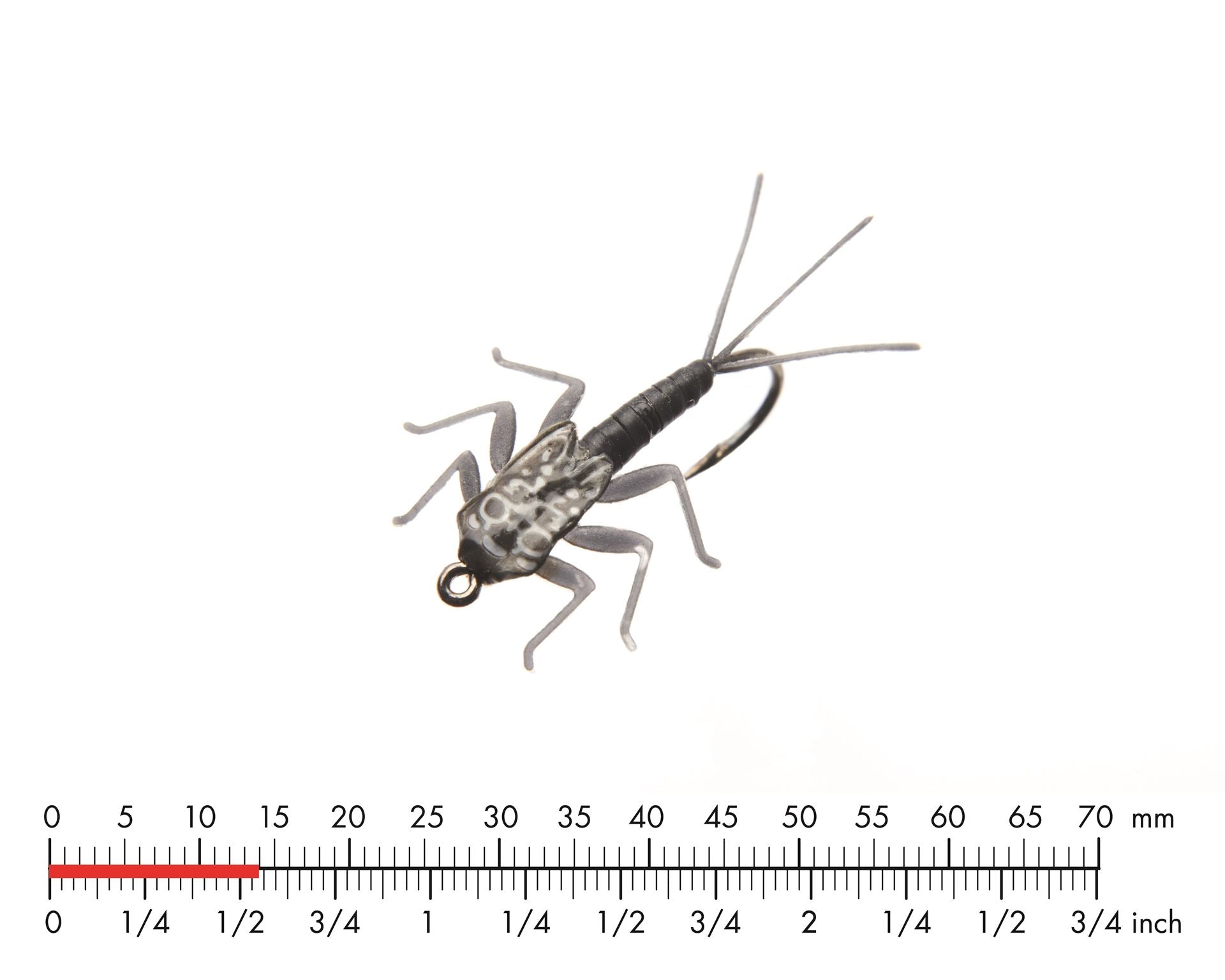
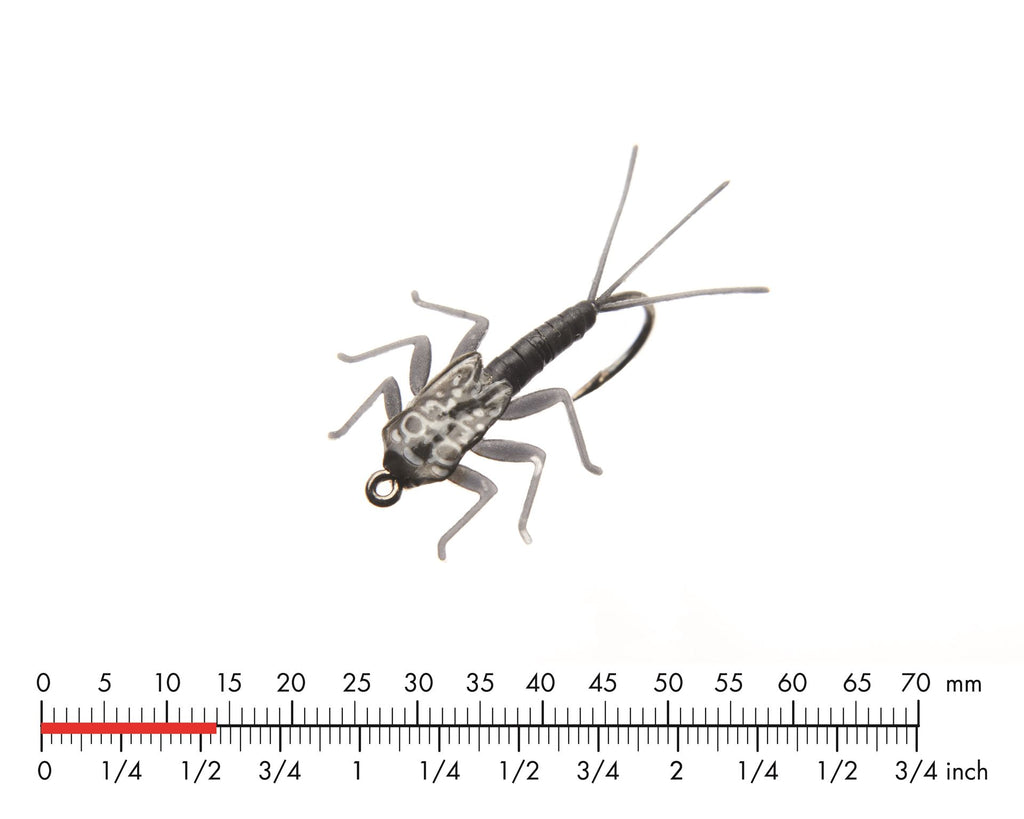
The Micro-Swimmer – J:son Mayfly Nymph 4 Black (Hook #14) The Black Nymph 4 is our most delicate imitation of swimming nymphs, specifically designed to match the smallest species within the Baetidae (such as small Baetis) and Leptophlebiidae families. On a size #14 hook, this fly represents the nymphs that often turn dark, almost jet-black, as they prepare to ascend to the surface for emergence. Its small profile and sharp black silhouette make it a critical tool when fish are selectively targeting tiny, dark nymphs in flat water or clear mountain streams.
Despite its small size, this nymph retains J:son’s exceptional anatomical realism. The segmented body and lifelike legs create a perfect footprint that fools even the most pressured trout or grayling. The black coloration provides high contrast against the sky or riverbed, ensuring visibility in peaty water or during low-light conditions. This fly is best fished on a fine tippet using a dead-drift technique or with extremely subtle, minute pulses to mimic the natural movement of a tiny swimming nymph.